Tell us a bit about your farm — where are you based, and how long have you been farming there?
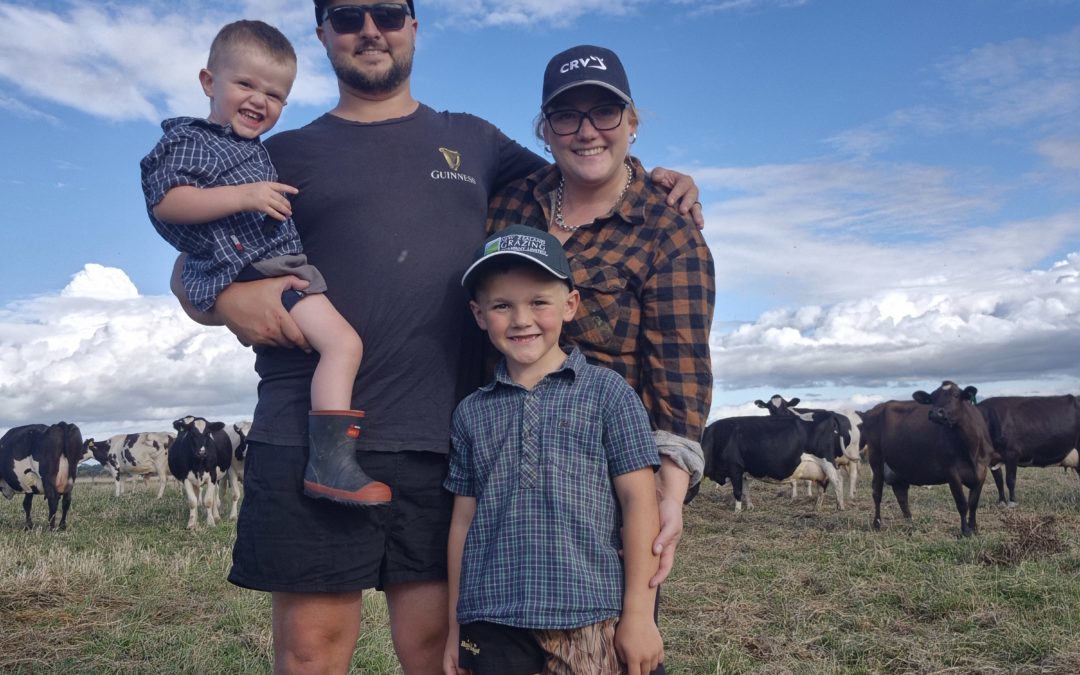
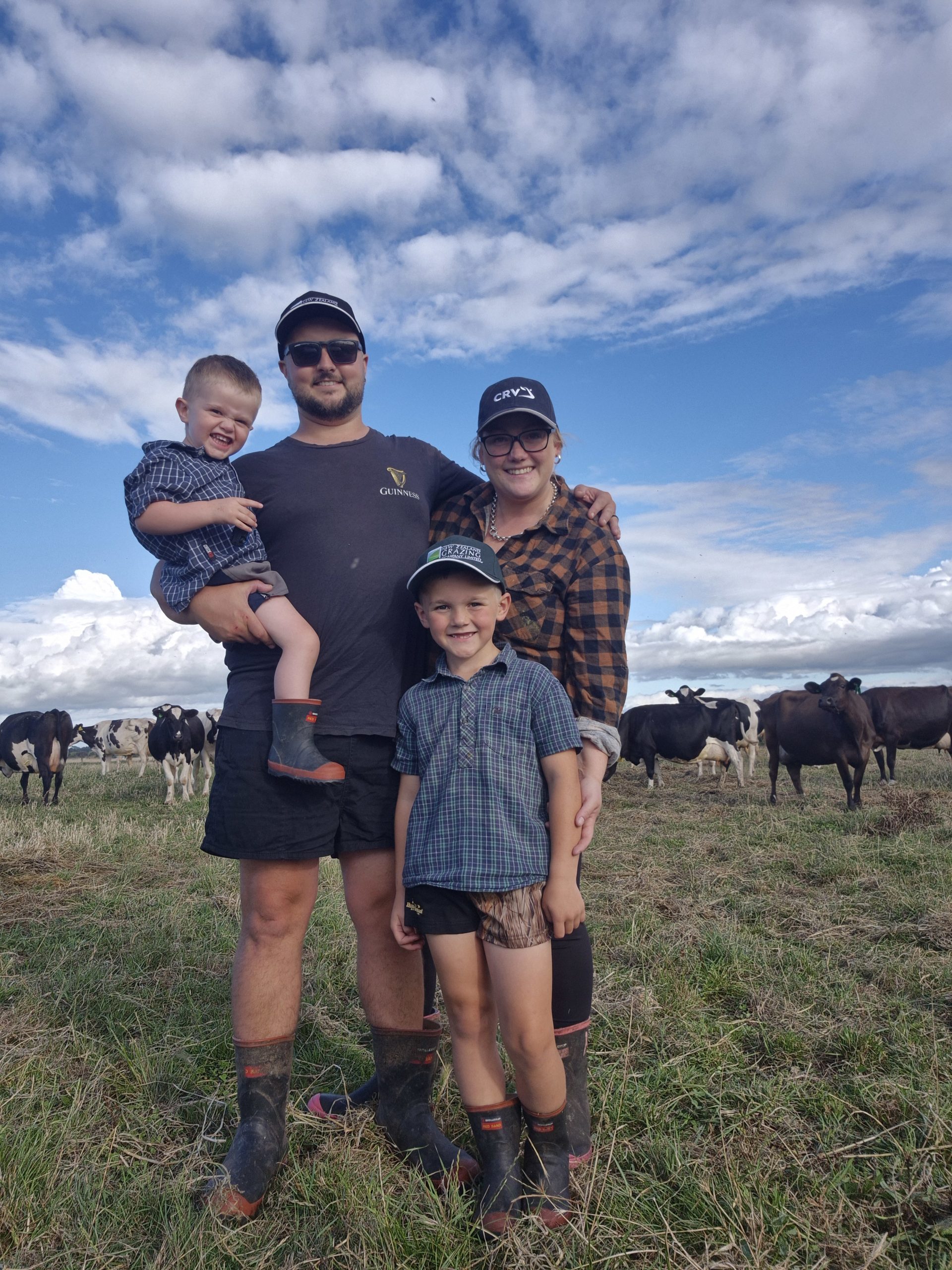
We farm in a place called Oroua Downs, which is 15 minutes north of Foxton. We are on our family farm which has been owned by our family since the early 1900’s! We are the 5th generation on this farm.
What’s the size of your herd, and what’s your calving or production system?
We have a small herd currently sitting at 240 cows. Fertility is important to us and grazing our Heifers with New Zealand Grazing has lowered the empty rate in our heifers. We put this down to the way they are fed and their condition while under NZ Grazing’s care. Out of 70 replacement animals, we only had one that was empty and had to be culled. They also make it easier for us by supplying good quality bulls. Having less empties means we have more milk in the vat and we can be more selective with culling the older girls in the herd.
Have you seen noticeable improvements in stock condition or liveweight since partnering with New Zelaand Grazing company?
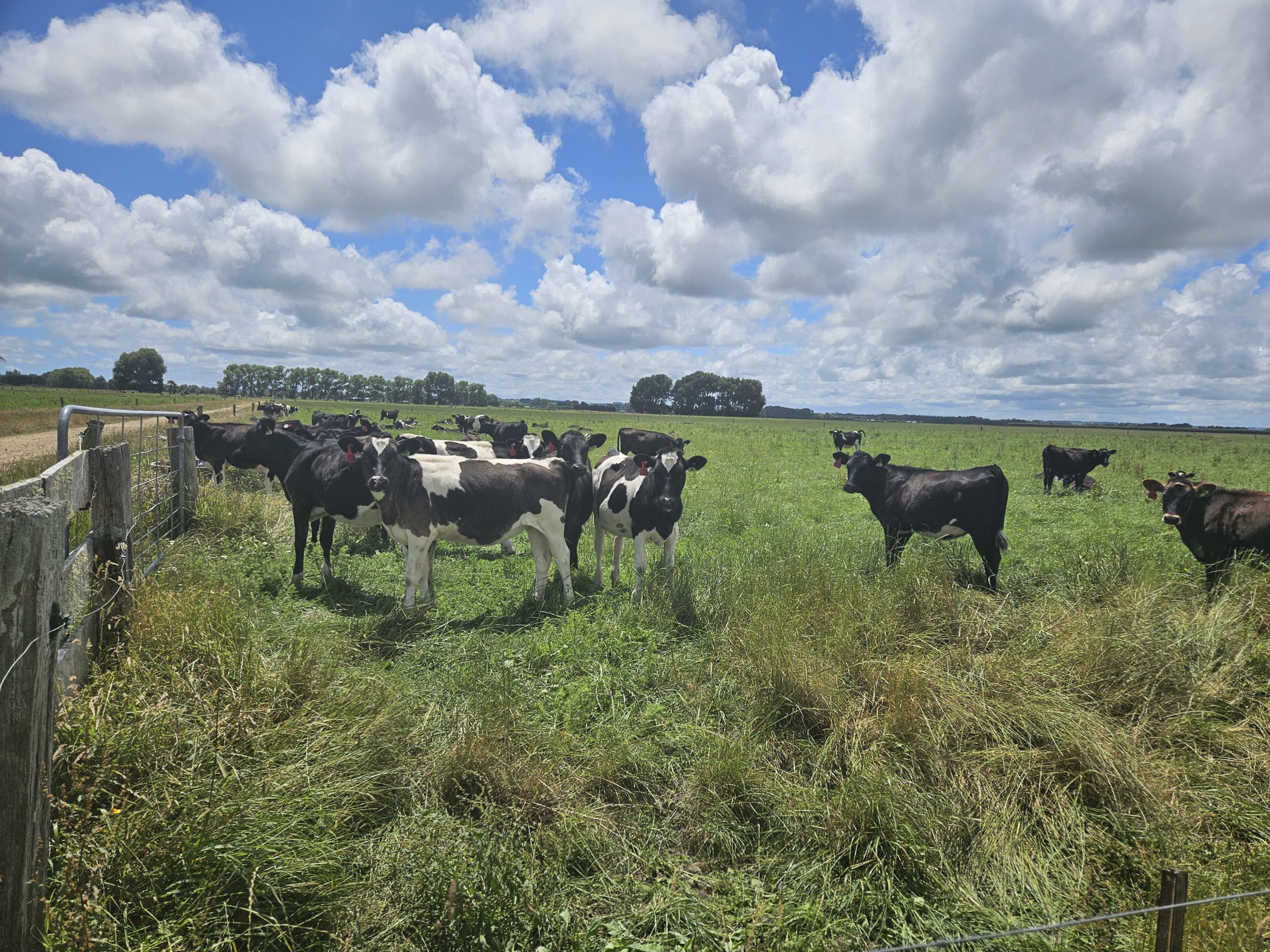
Yes! Absolutely yes. A HUGE improvement. They’re so much bigger than previous years. When they’re in the paddock with the rest of the milking herd, you cannot tell them apart. Not only is their condition great, but their temperament also while in the shed is a lot different to previous years. They’re very quiet and calm.
What do you value most about working with us?
The welfare of our animals is one of the most important things to us. The care and attention Amanda gives our girls is something we value a lot. She treats them like her own and is always on top of drenching, vaccinating etc. From the moment they leave home as calves, until the moment they return as in calf r2’s is all down to NZ Grazing. This leaves us more time to focus on all other aspects of the farm without worrying about the heifers. We also get monthly reports with their growth rates and other useful information that shows us how they’re tracking.
How do you manage seasonal challenges like summer dry or winter wet conditions?
We are in sand country so we get very dry in the summer and very wet in the winter! We make sure we are very proactive with our annual fertiliser and maintenance fertiliser. We get regular soil tests done. We also make sure we get Nitrogen on every 6 weeks when we can. This ensures we have excess grass in the spring and have paddocks we can shut up for balage. This usually is enough to get us through the summer without having to buy PKE to supplement the grass.
What are your current goals for the season ahead production system?
We are mainly grass fed and top up with in-shed feed. We use balage and PKE to top them up to get us through a deficit. Our focus is to utilise our grass more effectively and limit brought in supplements. Our goal is to produce as many milk solids as we have in previous years but spending less on brought in supplements.
What’s your favourite time of year on the farm? and why?
This could be controversial, but calving! Everyone has had a chance to relax and reenergise. Everyone is keen as to get back into it! There’s always things to improve on, more goals to strive for and who doesn’t love cute little calves. In saying that, the dry season is a pretty close second!