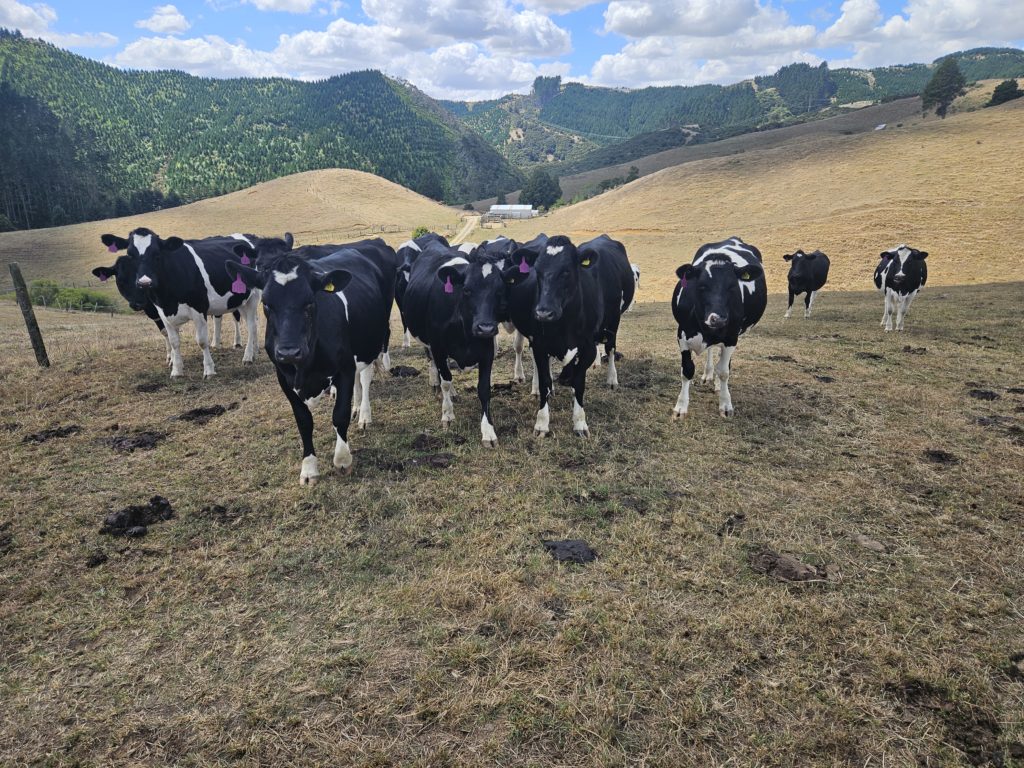
With seasons becoming more extreme, being proactive is the difference between a managed season and a crisis. I’ve broken my strategy down into three phases: Planning, Action, and Recovery.
1. Planning: Prepare for the Worst, Hope for the Best
I have seen farmers who plan well, get through a drought very successfully. Preparation gives you options. When you lack a plan, the weather dictates your profit margins.
- Audit Your Stock: Identify non-essential stock early. Decide what to sell or send to the works to reduce feed demand and protect your core contracts.
- Secure Supplements Early: Whether it’s making your own silage or contracting Palm Kernel (PKE), do it before the rush. Last summer in the Waikato, silage hit $130/bale mid-drought, don’t get caught in a price spike.
- Invest in Summer Crops: Consider crops like Chicory, I have seen this used in the dry very successfully. Beyond being a high-protein feed, it is harder for parasites and eczema spores to survive on its leaves, saving you significantly on animal health costs.
- The 5 P’s: Remember, Prior Planning Prevents Poor Performance. (it could be 6 P’s!)
2. During the Dry: Management in the Heat
When the paddocks look like the Sahara, your focus needs to shift to maintenance and efficiency.
- Know Your Numbers: Do you know how many kilograms of dry matter (kgDM) you are actually offering? Estimating the kgDM per bale ensures your stock are getting enough to meet growth targets.
- Balance the Diet: Chicory and PKE lack fibre. Ensure you are supplementing with pasture or silage to complete the “diet puzzle.”
- The “Zero Grazing” Strategy: Sacrifice an area of the farm where stock predominantly graze, preserving the rest of the farm from overgrazing, protecting the root and growth systems for when the rain eventually comes.
- Timing Matters: Feed out first thing in the morning or late in the evening. Cooler temperatures are more inducive for cattle to graze and make it easier for animals to digest feed and convert that energy into growth.
- Water is Life: Ensure young stock have constant access to clean water and shade. A thirsty animal will never hit its growth targets. Check water supply to stock every day.
3. Post-Rain: The Recovery Phase or “Green Drought”
The first rain doesn’t mean the drought is over; it’s the start of a critical transition. Many a farmer has stopped feeding out too early, resulting in subsequent dreadful weight gains.
- Continue “Zero Grazing” and feeding out: Don’t rush the whole farm back into rotation. Keep stock on sacrifice paddocks a little longer with supplement to let the rest of the farm build a “feed wedge”. Grass grows grass.
- Keep the Fiber Going In: New green grass after a drought is often “gutless”, high in water but low in substance. Keep feeding silage or hay to slow down digestion through put and ensure animals actually absorb the nutrients.
- Test and Drench: Drought breaks often trigger a massive influx of parasites. Use your Techion kits to test faecal egg counts (FEC), test 4 weeks after first rain. The internal worm burden typically peaks 4-6 weeks after rain.
- Apply Nitrogen: If the soil temperature is still high enough, a boost of Nitrogen can accelerate growth before the winter chill sets in and help set up better for winter.
A Final Word: Look After Yourself
We are all in this together. Drought is stressful, and your mental health is just as important as your stock’s health.
Don’t be too proud to ask for help. Whether it’s your service manager, a neighbour, or the Rural Support Trust – reach out. If you want a farm visit to talk through a plan, give your service manager a call, they may even bring the morning tea!
Funnily enough, as I finish writing this, the clouds have opened up here in the Waikato. Let’s hope it’s the start of a good summer!
Aaron Leppard
Lead Service Manager Waikato