Preparing for a Dry Summer
We’ve all heard the sayings: “Plan for the worst, hope for the best,” and the classic 5 Ps (“Prior preparation prevents poor performance”). If the meteorological forecasts are right, this is the summer we really need to take them seriously.
With El Niño expected to peak through late spring and summer, the risk of widespread drought is high. While this weather pattern typically dries out the east, it can also drive strong, dry westerlies and unreliable rainfall to the west.
I’m not writing this to be all doom and gloom, but rather to help you prepare your farm to cope with a dry season. We need to ensure enough feed is on hand to keep stock well-fed and growing. Here is a look at the pros and cons of three common feed options, plus one vital reminder.
- Silage: Quality Over Quantity
Silage is a fantastic way to bank excess spring grass for the summer slowdown, but management is everything.
- Cut at 30 to 40 days: Leaving paddocks for 6 to 8 weeks just to get bulk, results in low-quality, rank grass that is unpalatable to stock—essentially just a gut-filler. You can’t make a silk-purse out of a pig’s ear! A 30–40 day cut provides high-quality feed while still yielding a decent number of bales and what is left is green leaf that will get growing again quickly post-mowing.
- Keep it airtight: Ensure it is wrapped/covered properly; oxygen is the enemy of good silage.
- Test it: Have your local tech rep test your silage so you know the exact dry matter content and nutritional value of what you’re feeding.
- Palm Kernel Extract (PKE)
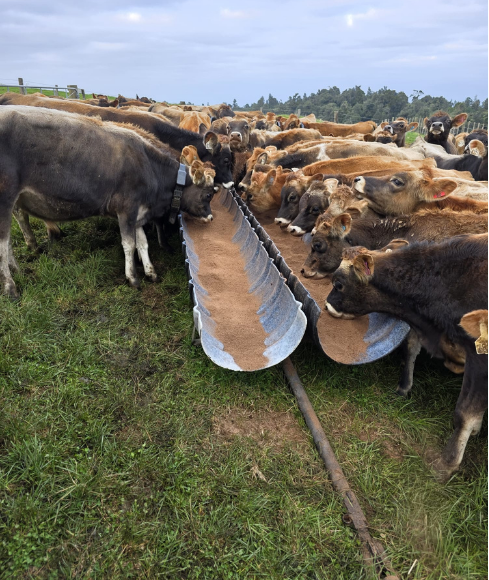
We all know the pros and cons of PKE. Fortunately, more suppliers are offering half-tonne bags, and some even do PKE mixes in 20kg bags, which removes a lot of the traditional handling headaches.
- Contract early: Lock in a contract price early. Spot prices skyrocket during a dry summer.
- Weigh your feed: Don’t guess! A recent conversation with a grower who couldn’t understand why he wasn’t achieving his weight gains, discovered when he weighed his 20 L bucket filled with PKE that it was closer to 15kg not 20kg. At many times of the year 70% of the diet is required for maintenance alone, leaving only 30% of the diet contributing to weight gain/growth. If your feed allocation is insufficient, maintenance will be satisfied first, meaning you will miss your growth targets entirely when animals are underfed.
- Summer Crops (e.g., Chicory)
While I won’t pretend to be an agronomist, cropping can be highly effective. It requires relatively flat land and means taking pasture out of your rotation while the crop establishes, but the kickbacks are great.
- Animal health: Parasites and facial eczema spores can’t survive on a chicory sward, which can considerably drop your animal health costs.
- Supplement with fibre: Chicory lacks fibre. Provide ad-lib access to silage in a ring feeder so stock can self-medicate and balance their diet. (Always consult your local seed rep for area-specific advice).
Don’t Forget the Water!
In hot, dry conditions—especially when animals are eating dry feeds like silage and PKE—they will drink far more than you expect. Ensure they have ample, constant access to clean water.
At the end of the day, we need to PLAN, PLAN, and PLAN some more. Think of ways to combat the coming summer now, so if it gets as dry as expected, you are already prepared
“Because at the end of the day, hoping for rain isn’t a farming strategy. Prepare now, so you don’t pay for it later.”
Aaron Leppard
Lead Waikato Service Manager