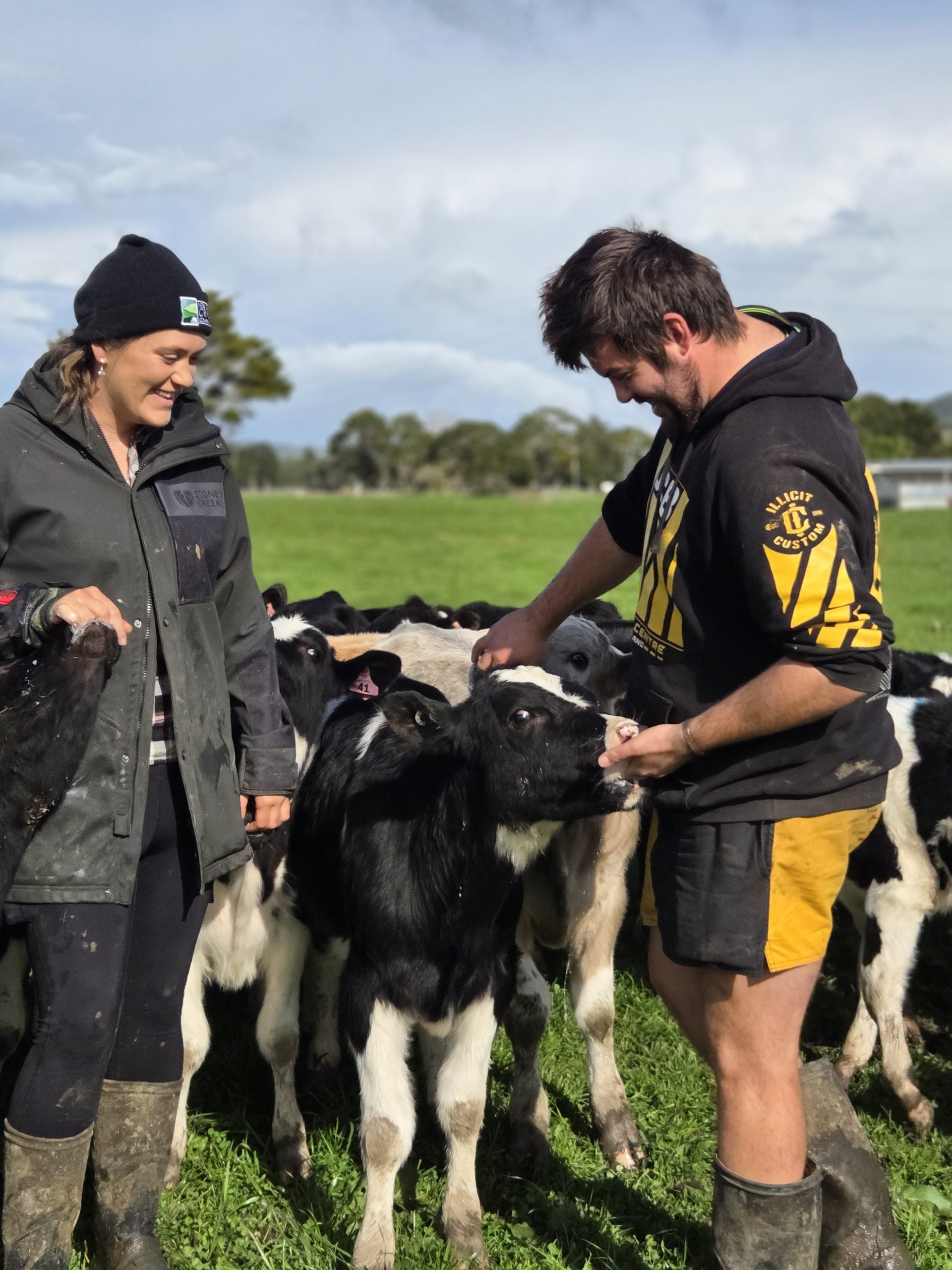
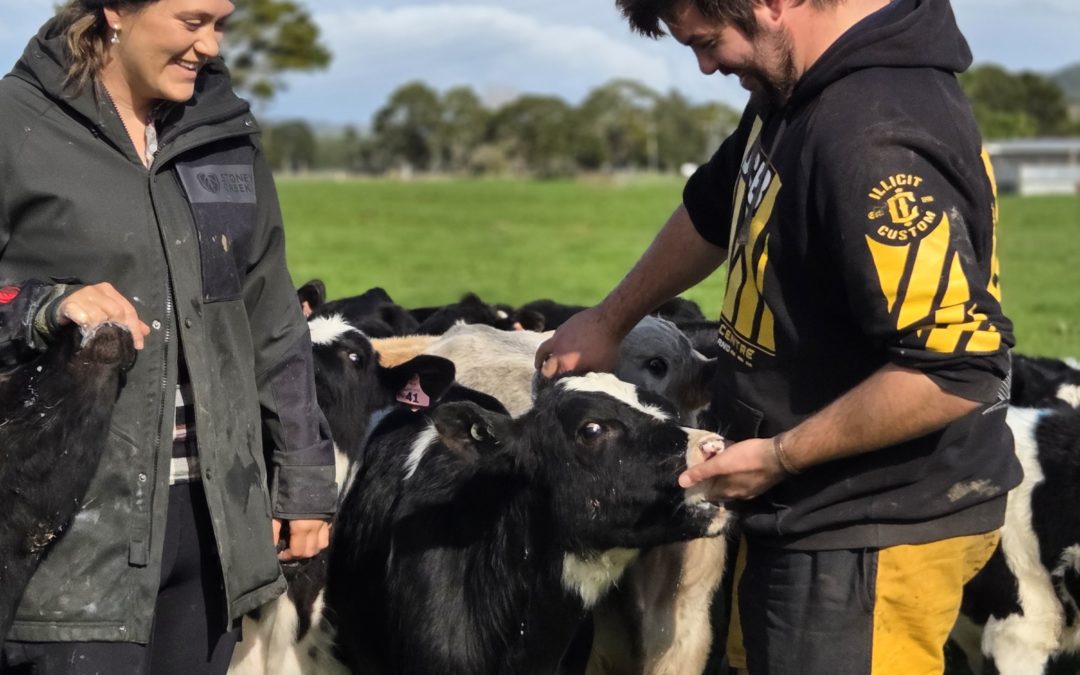
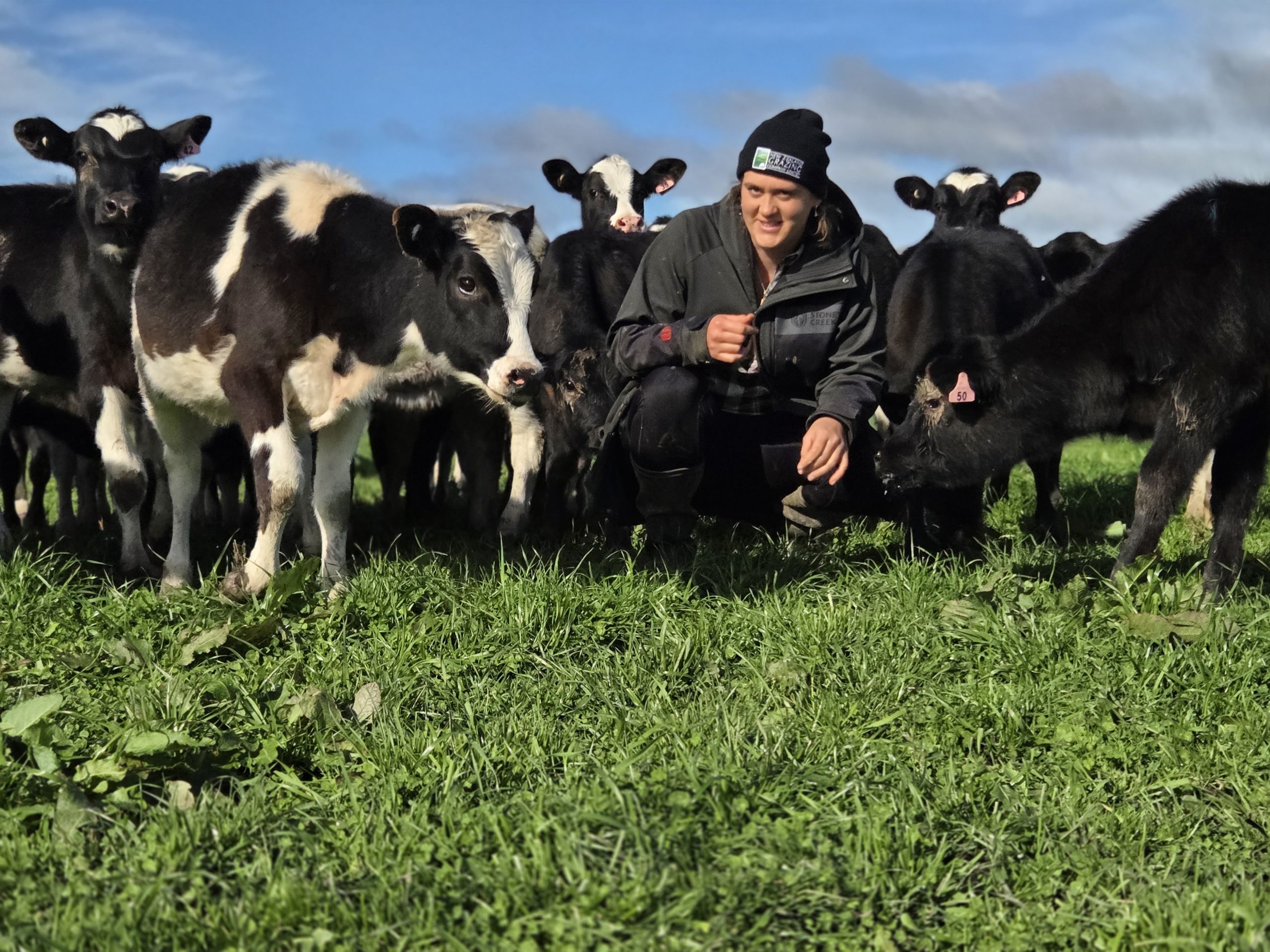
Tell us a bit about your farm. How long has it been in the family, and how long have you been running it etc…?
Our farm has been in the family for 60 years. My grandfather, Mossy Bryham, established the farm with a pedigree Jersey herd. He passed away suddenly in 1983, and my grandmother, Jeanette Bryham, carried on the farming operation with the help of contract milkers. Her final sharemilker, Neil Troost, worked alongside her for 27 years and played a huge role in helping me transition onto the farm 3 years ago.
What is the size of your herd, and what is your calving system?
We milk 320 cows, total autumn calving. During winter, we also bring in a few carryover cows from other farms.
How long have you been working with New Zealand Grazing, what brought you to us, and what do you value most about working with us?
We’ve been with NZ Grazing for two years. Initially, I was drawn to the service because of the up-to-date vaccination programme and the high standard of care that comes with rearing young stock. What has really kept me with NZ Grazing, though, is the consistent monthly weighing reports.
Receiving regular updates means I always know how my heifers are performing without needing to be there every day. It gives me more time to focus on the day-to-day demands of contract milking, as well running the farm, while having confidence that my calves are well fed, well looked after, and continuing to grow. After all, they’re the future of my herd and represent my best genetics.
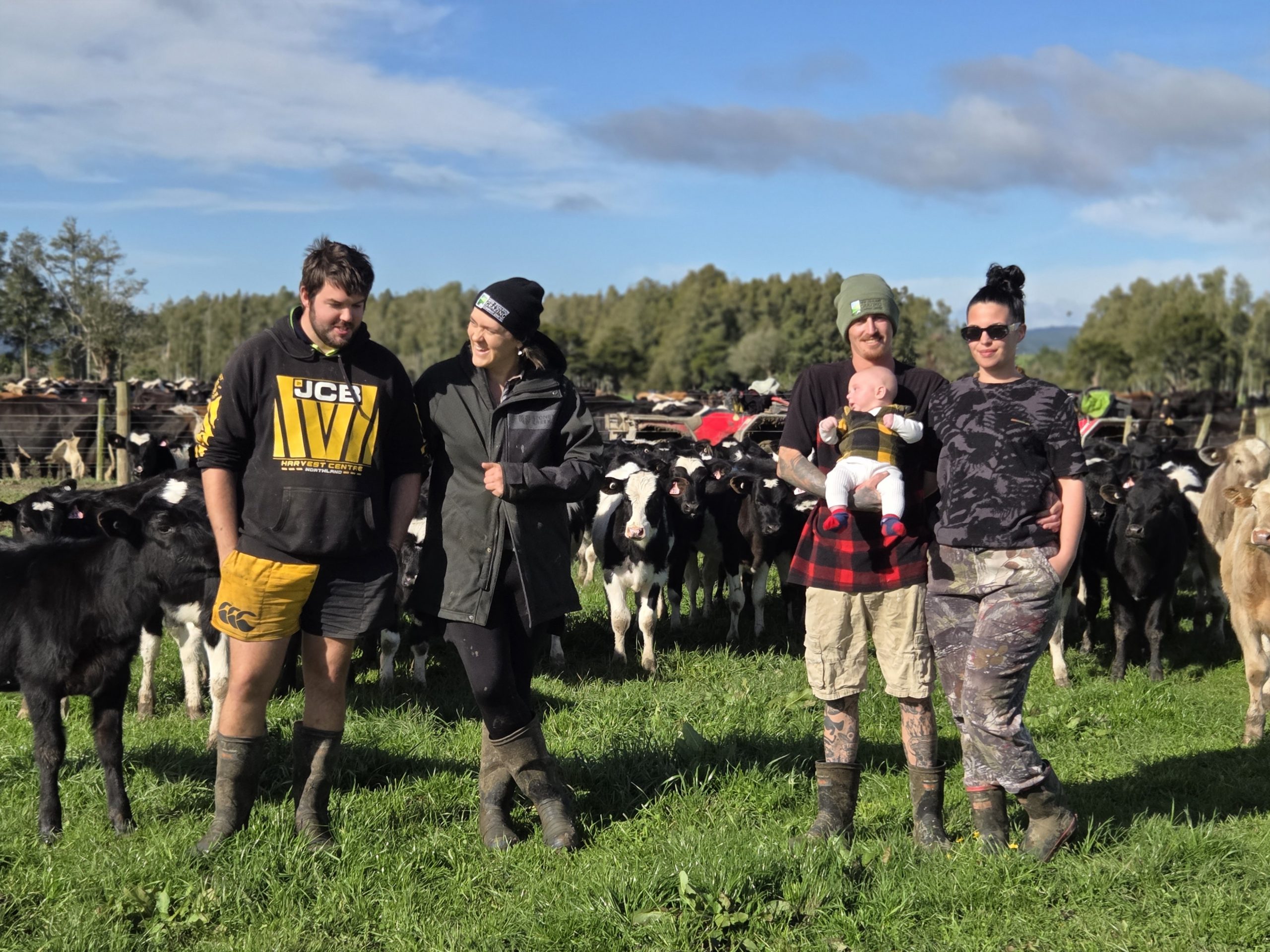
What are your goals for the future?
I have two main goals. The first is to building up my own herd so that when the time is right, I’ll be in a strong position to step into sharemilking.
The second is to continue improving the herd genetically and from a performance perspective. I want each heifers coming onto the platform to out-do the previous year’s. Fertility is also a major focus, as getting cows back in calf earlier means more days in milk and greater overall productivity.
Another key goal is reducing our somatic cell count. We’re currently sitting at around 150, and I’d like to bring that down to 100 through continued improvements in herd health and management.